Paul O’Connor says he bought this book to show support for a friend, but he read it because the story and the writing drew him in.
Reviewed by Paul T. O’Connor.
THE RESETTLEMENT OF VESTA BLONIK. By Denise Smith Cline. Regal House Publishing. 251 pages. $19.95, softcover.
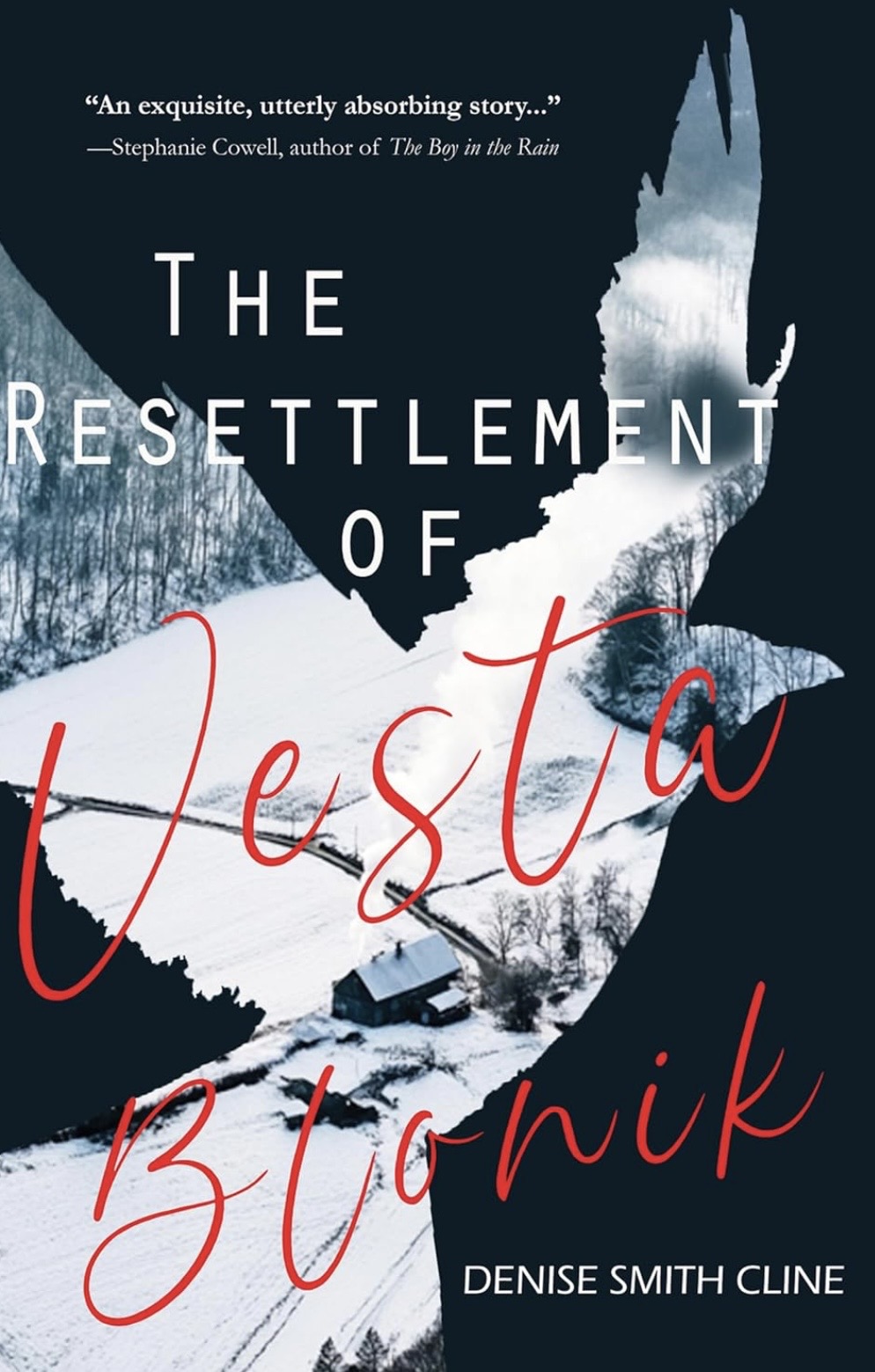
Leo Tolstoy taught us that all families are unhappy in their own unique ways. And Denise Smith Cline, in The Resettlement of Vesta Blonik, follows up with two examples of singularly unhappy and screwed-up families.
It is 1937 and the Bloniks are farming a depleted piece of land in northeastern Minnesota, not far from Duluth. Never-married Vesta is 31 and living alone with her widowed father, a real turd of a guy. He farms all day and treats her miserably when he gets home. He also has a secret that he won’t share with her, despite her pleas for him to do so.
Gordon Crenshaw is a patient in Raleigh’s Dorothea Dix Hospital involuntarily placed there by his family. He suffers from severe depression due to the death of his young wife and newborn daughter during childbirth. The family committed him to the psychiatric hospital over concerns that he would kill himself. His behavior is so anti-social that medical authorities are considering electric shock therapy or a lobotomy.
One day Vesta learns that her father has married a local widow, run off to Duluth for a winter job, and left her the lonely responsibility of maintaining the farm until he returns in the spring. He’s also entered the farm into the Depression-era New Deal farm resettlement program. One day soon, Dad, his new bride and her two sons will have a new farm on richer land and Vesta will be without a place to live.
The Crenshaws, deeply divided over the wisdom of having sent Gordon to the loony bin – Gordon’s words, not mine – is suddenly concerned that they might never get him back, that he might be turned into a vegetable by modern medical science. But to get him released from state control, they must present a care plan, and they are all too busy to provide that attention.
And that’s where the Crenshaws formulate an idea as loony as anything being treated on Dix Hill: Find him a wife without letting her know that he’s a mental patient or letting him know that he’s being shopped as a potential husband. And, yes, through church connections they find Vesta.
That’s as far as I go with the plot details for fear of giving away too much. I will say, however, that there are a few twists here.
I loved this book first for Cline’s portrayal of the loneliness and despair Vesta faces in Minnesota, especially with no income, little cash and a harsh winter approaching.
Cline’s depiction of Gordon’s sorrow, frustration and lack of say in his own life is equally compelling. And equally sad.
I bought this book because Cline is a friend and her son was one of my best students ever. With a lot to do this spring, and a desk full of books I had already bought or borrowed, I wasn’t even sure I’d read it. Then friends told me they really liked it, and that I should read it. So, I did last weekend.
On Sunday afternoon while out to dinner with friends, I found myself ignoring the conversation and thinking about the story, about Vesta, Gordon and those family members – not all of whom turned out to be awful. I’d become engrossed.
So, now I know where my former student got his writer genes – from his mom.
For an unusual story that’s well written, entertaining and even funny in a dark way, I recommend The Resettlement of Vesta Blonik, especially if you like reading about unhappy families.