Reviewed by Linda C. Brinson
THE MARRIAGE BED. By Tommy Hays. Blair/Carolina Wren Press. 300 pages. $27.95.
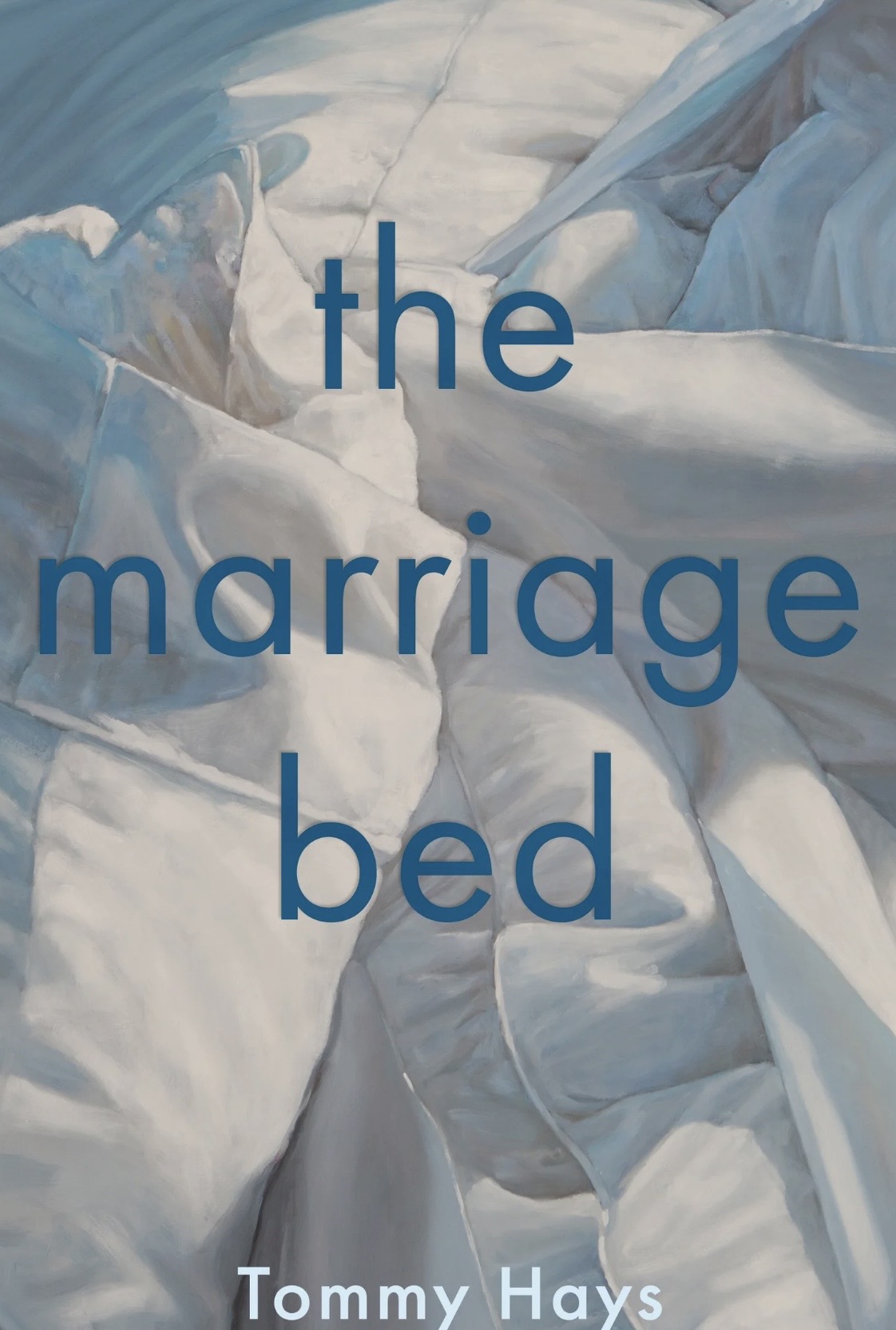
On what starts out seeming like a typical Tuesday evening, Asa Flowers drives home from his job teaching poetry at a small college in Asheville, N.C. The car radio tells him storm clouds will be heading that way later in the evening.
Little does Asa know how accurate, in a metaphorical and well as literal sense, this forecast will prove to be.
Hardly has he walked into his home, expecting a typical quiet and comfortable October evening with his wife of 25 years in their now empty nest, when he realizes something is bothering Betsy. Before much time passes, they have a bitter argument, and Asa decides, for the first time in their marriage, to sleep in the garage apartment.
Thus begins The Marriage Bed, the new novel by Tommy Hays, one of North Carolina and the South’s finest authors.
By the time the next morning dawns, Asa’s life will be radically changed in a way he never imagined. Together, the argument with Betsy and the storm predicted on the radio leave him separated from his wife not just for one angry night, but forever.
In the days that follow, he learns much that he had not known about his and Betsy’s relationship and their lives, apart and together. He also finds himself struggling to be a better parent to their college-age son and daughter. He even must try to learn to be a better companion to their dog.
Like Hays’ earlier works, The Marriage Bed is not a sensational one, and it’s unlikely to win the attention of people looking only for the latest blockbuster heading to the top of the best-seller lists.
What Hays has done, again, is write a quietly moving story that’s bigger in message than in size, a book that gets to the heart of human relationships, of love, and of family.
He tells the story of Asa and Betsy – their marriage, their lives apart and together, their efforts to care for their children, and what remains when Betsy is gone – through a series of short chapters that shift among several points of view in or close to Asa’s family, and several periods of time.
Hays skillfully uses these understated narratives to tell a story of what it means to be human, and what it means to join your life with someone else’s. Humans, we see, are mortal, and flawed, and they make mistakes.
But, we also see, humans can find love, preserve it even through rough times and let it be an impetus to make necessary changes.
This is a beautifully written, insightful book that draws the reader in.